

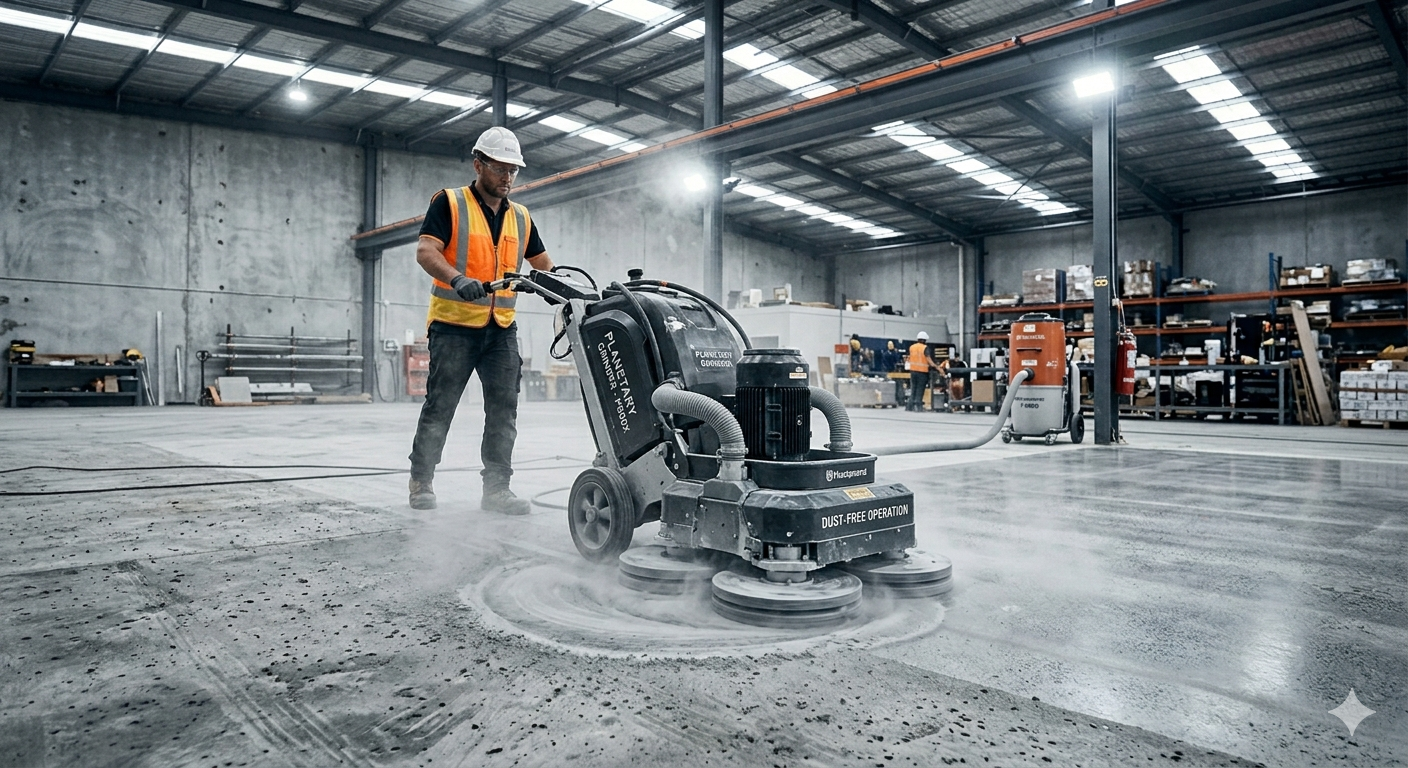
Why Concrete Grinding Matters
Concrete floors are strong, but they are not always smooth when they are first installed or after years of use. Many people think concrete is already “finished” once it dries, but in reality, it often needs extra work to make it safe, even, and visually clean. This is where concrete grinding comes in.
Concrete grinding is the process of smoothing a rough concrete surface using a machine called a floor grinder or concrete grinder. It removes uneven layers, old coatings, stains, and imperfections from the surface of the floor. The goal is simple: turn a rough, uneven surface into a flat, smooth, and usable floor.
Rough concrete can cause several problems. It creates dust, looks unfinished, and can even become a safety risk when the surface is uneven. In homes, garages, warehouses, or commercial spaces, uneven floors can lead to accidents or damage to equipment.
This is why grinding is often the first and most important step before polishing or applying coatings. It prepares the surface properly and ensures the final finish looks professional and lasts longer. Whether it’s a small home project or a large industrial floor, using the right floor grinder makes a big difference.
In simple words, concrete grinding is what transforms “rough and raw” into “clean and smooth.”
What Is Concrete Grinding? (Simple Explanation)
Concrete grinding is a simple idea: it is the process of smoothing a concrete surface by removing a very thin layer from the top using a machine.
A concrete grinder works by spinning abrasive discs (often diamond tools) at high speed. As the machine moves over the floor, it gently grinds away rough spots, bumps, and imperfections. It does not break the whole surface—it only removes what is unnecessary on top.
Think of it like sanding wood. When wood is rough, you use sandpaper to make it smooth. Concrete grinding is the same idea, but with a powerful machine.
There is a big difference between rough concrete and finished concrete:
- Rough concrete feels uneven, may have bumps, and looks dull or unfinished
- Ground and finished concrete is flat, smooth, and ready for polishing, coating, or direct use
Concrete grinding is used in many places:
- Homes (garage floors, basements, patios)
- Warehouses and factories
- Shops and commercial buildings
- Parking areas and industrial spaces
In all these places, smooth flooring is not just about looks—it also improves safety and durability.
How Does Concrete Grinding Work? (Step-by-Step Process)

Concrete grinding is not done in one quick pass. It is a step-by-step process that slowly improves the surface.
Step 1: Inspecting the floor
Before starting, the floor is carefully checked. Professionals look for cracks, bumps, coatings, and uneven areas. This helps decide how much grinding is needed.
Step 2: Choosing the right floor grinder
Different floors need different machines. A powerful floor grinder is selected based on the size and condition of the surface. Bigger areas often need industrial machines, while smaller spaces may use compact grinders.
Step 3: Starting with coarse grinding
The process begins with rough grinding. A coarse abrasive is used to remove the top uneven layer of concrete. This step removes the biggest imperfections.
Step 4: Gradually refining the surface
After the rough pass, finer grinding discs are used. The machine goes over the surface multiple times. Each pass makes the floor smoother and more even.
Step 5: Finishing for smoothness
In the final stage, very fine grinding is done. This creates a smooth, even surface that is ready for polishing or coating.
In simple terms, concrete grinding works by slowly “shaving off” thin layers of the surface until it becomes perfectly even.
How Do You Grind Concrete to Make It Smooth?
To make concrete smooth, you cannot rush the process. It requires patience and the right method.
First, you start with a rough grind using a concrete grinder. This removes high spots and uneven patches. Then, you slowly move to finer grinding levels to smooth the surface step by step.
There are three important things that affect the result:
Pressure
If too much pressure is used, the floor can get damaged. If too little is used, the surface won’t smooth properly. The balance is important.
Speed
The machine must move at a steady speed. Moving too fast leaves uneven areas, while moving too slow can over-grind a section.
Grit level
Grinding discs come in different grit sizes. Coarse grit removes material quickly, while fine grit creates smooth finishing.
A professional using a proper floor grinder understands how to balance all these factors. That is why expert work often looks much better than DIY grinding.
What Is the Fastest Way to Grind Concrete?

The fastest way to grind concrete is not about rushing—it is about working smart.
Here’s what actually makes the process faster:
Using the right floor grinder
A high-quality floor grinder covers more area in less time. Industrial machines are designed for speed and efficiency.
Using diamond tools
Diamond grinding discs cut through concrete faster and more evenly than basic abrasives.
Correct grit selection
Starting with the correct grit saves time. If you begin too fine, you will waste time removing large imperfections later.
Working in sections
Dividing the floor into sections helps maintain speed and consistency.
However, rushing the process can damage the surface. If grinding is done too aggressively, it can leave marks or uneven patches. So the fastest way is always the balanced way—speed with control.
What Is the 4-2-1 Rule for Concrete? (Simple Explanation)
The 4-2-1 rule is a simple guideline often used in concrete work to maintain strength and consistency in mixes and finishing.
In basic terms:
- 4 parts aggregate (stone or gravel)
- 2 parts sand
- 1 part cement
This ratio helps create strong, balanced concrete.
Why does it matter in grinding?
Because the quality of concrete affects how easily it can be ground and how smooth the final surface becomes. If the mix is weak or uneven, grinding may expose more imperfections. If it is well-balanced, the surface finishes more evenly and smoothly.
In simple words, the 4-2-1 rule helps ensure the concrete itself is strong enough for proper finishing and grinding.
Tools Used in Concrete Grinding
Concrete grinding requires the right tools for good results.
Floor grinder
This is the main machine used. A floor grinder is powerful and designed to handle large surface areas efficiently.
Concrete grinder
A concrete grinder is used for more controlled or detailed grinding work. It can be handheld or machine-based depending on the job.
Grinding discs / diamond pads
These are attached to the grinder. They do the actual cutting and smoothing of the surface.
Dust control systems
Grinding creates dust, so vacuum systems are often used to keep the area clean and safe.
Using the right tools ensures better results, faster work, and a more professional finish.
Common Uses of Concrete Grinding Services
Concrete grinding is used in many different industries and spaces.
Residential floors
Homes use grinding for garages, basements, patios, and indoor floors to make them smooth and clean.
Commercial spaces
Shops, offices, and showrooms use grinding to prepare floors for a polished or modern look.
Industrial floors
Warehouses and factories need strong, smooth floors for heavy machinery and movement.
Surface preparation
Before applying coatings, epoxy, or polish, grinding is necessary to prepare the surface properly.
Professional grinding services help ensure the job is done correctly, safely, and efficiently.
Benefits of Concrete Grinding
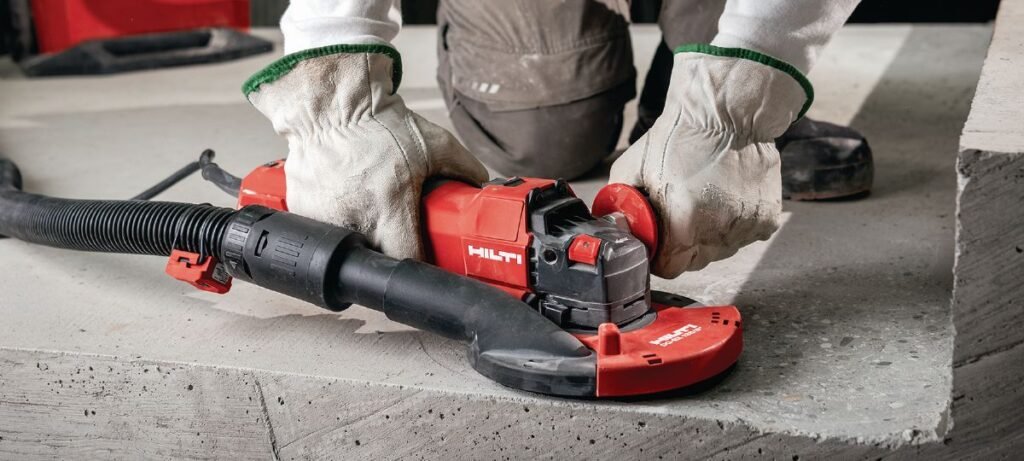
Concrete grinding offers many important benefits:
- Makes floors smooth and safe to walk on
- Removes old coatings, glue, or paint
- Fixes uneven surfaces and bumps
- Improves the overall appearance of the floor
- Prepares the surface for polishing or sealing
- Increases durability and lifespan of the floor
A properly ground floor not only looks better but also performs better over time. This is why using a professional floor grinder service is often the best choice.
Conclusion: From Rough to Smooth Made Simple
Concrete grinding is a simple but powerful process that transforms rough, uneven surfaces into smooth, usable floors. By using the right floor grinder, proper technique, and step-by-step grinding, even the toughest concrete surfaces can be made flat and clean.
We learned that:
- Grinding removes thin layers of concrete to smooth the surface
- A concrete grinder is essential for precision and finishing
- The fastest way to grind is using the right tools, not rushing
- The 4-2-1 rule helps ensure strong and workable concrete
- Professional grinding services make a big difference in quality
From homes to industrial spaces, concrete grinding plays a key role in creating safe, durable, and visually clean floors. It is the foundation of every smooth surface you see today.
In the end, it’s simple: rough concrete is the starting point, and grinding is what turns it into something strong, smooth, and ready for use.

Leave a comment
Your email address will not be published. Required fields are marked *